Cape Town achieving 79% of procurements at below-market rates
27 November 2023
The City of Cape Town is achieving 79% of its procurements at below-market rates for a range of goods and services essential to service delivery. This is the finding of the City’s first Value for Money Report, a new transparency measure launched by Mayor Geordin Hill-Lewis at the Investment One Stop Shop at St George’s Mall on Monday, 27 November. The full report can be accessed here: https://bit.ly/Value-for-money-report.
The report analyses more than 2 000 contracts and 300 commodities classified as essential to City service delivery in 2021/22.
The overall finding is that Cape Town achieved a full 79% of procurements at below market rates. The City achieved this by leveraging economies of scale, successful negotiating strategies, and competitive pricing by suppliers. A further 6% of procurements were at market prices.
'We introduced the Value for Money Report as a new transparency measure to show the public exactly what the City paid for goods and services essential to service delivery in 2021/22. This includes the price of 300 commodities used regularly in municipal operations.
'This data not only promotes public confidence that Cape Town is achieving value for public funds spent, it is also helpful for suppliers keen to do business with the City.
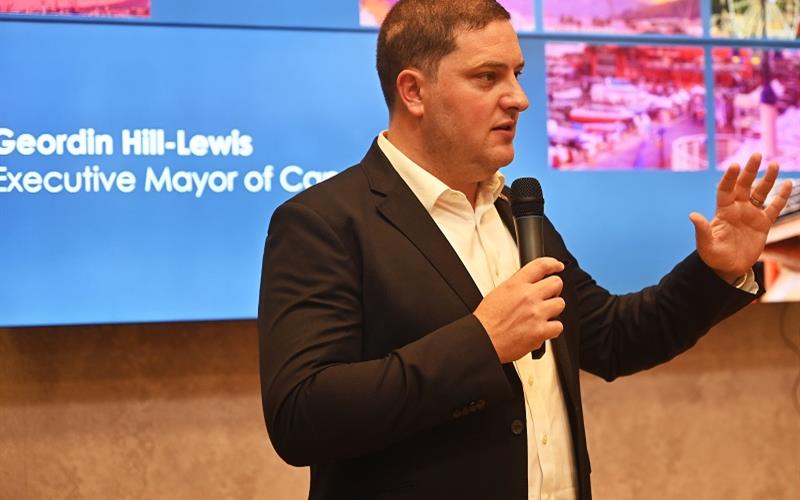
'I would like to challenge other metros to publish similar reports. This level of transparency will promote more competitive economic activity and public value from municipal spending, which is vital given budget constraints,' said Mayor Hill-Lewis.
Hill-Lewis said the finding that Cape Town is achieving value from procurements bodes well for the City's plans to massively ramp up infrastructure spending, with R43bn allocated over three years, more than Joburg and Durban combined.
'Building sound institutions, transparency, and integrity in spending, leads to a government that can really deliver - where things get better over time, where infrastructure can be built, and where the social safety net can be expanded.
'The poor are left worse off when the public services on which they depend collapse because public money is badly spent or stolen. Our purpose in Cape Town is to lift people out of poverty over time and good governance is a vital enabler for this,' said the Mayor.
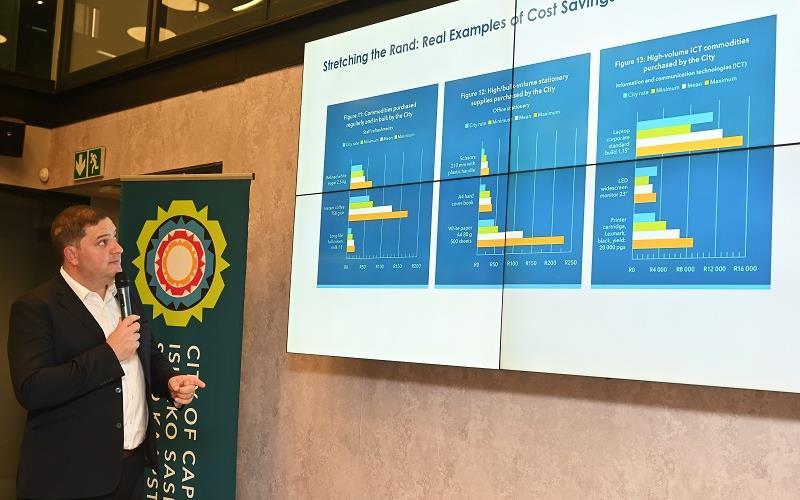
Examples of below-market prices achieved by the City for essential goods and services include:
· Course gravel for roads: R239,40 vs R527,68 per ton
· Fire hydrant (65mm): R2242,50 vs R4025
· Traffic signboards: R575 vs R1175,30 per m2
· Sewer cleaning: R409,26 vs R824,42 per metre for 1500mm pipe
· General mowing and verge trimming: nine cents vs 25 cents per m2
· Street-lighting pole: R4396,36 vs R6028,26
· CCTV camera system (installed): R20 398,70 vs R32 375,65 per unit
These prices are in stark contrast to instances of well-publicised price gouging.
Eskom is a prime example:
· The City pays R11 per one litre of milk compared to Eskom's R21
· The City pays 0,93 cents per black refuse bag compared to Eskom's R51
· The City pays R3,02 for a one-ply toilet paper roll compared to Eskom's R26
'Cape Town's dynamic SCM Policy enables negotiations with tenderers to explore better pricing.
'The City first negotiates market-related prices with the highest scoring bidder, followed by the next best scoring, if no agreement is reached.
'To ensure fairness, the City applies this approach to all written and formal written price quotations; does not allow preferred bidders a second or unfair opportunity; and negotiations may not lead to a higher price,' said Councillor Siseko Mbandezi, Mayoral Committee Member for Finance.
The report found that 15% of procurements at above-market rates relate mainly to limited bidders or highly specialised services, supply constraints, unfavourable exchange rates, and regulatory red tape or local content requirements.
'Achieving value for money will further become more difficult if National Treasury approves its new preferential procurement regulations as published. The more you limit who qualifies to bid, the less competition, and the higher the prices are likely to be. Similarly, the more emphasis you place on preferential procurement, rather than value for money, the less services you can buy for the same money. This means that relatively few business owners benefit, rather than those that most need services from the state,' said Cllr Mbandezi.
The report further notes that reasonable pricing goes beyond the cost of an item or service, including factors such as:
· appropriate specifications;
· quality;
· fit-for-purpose assessment;
· lead- and delivery times; and
· prevailing market pricing, seldom within the City's control.
The City implements a multi-faceted assurance module to support good governance, including:
· internal audits
· internal investigations
· self-reviews
· risk management
· audit action plans,
· departmental Corrective Plan and Key control
· monitoring tool
· consequence management
End
Published by:
City of Cape Town, Media Office